Moodboards for Game Studios: Aligning Concept Art Across the Studio
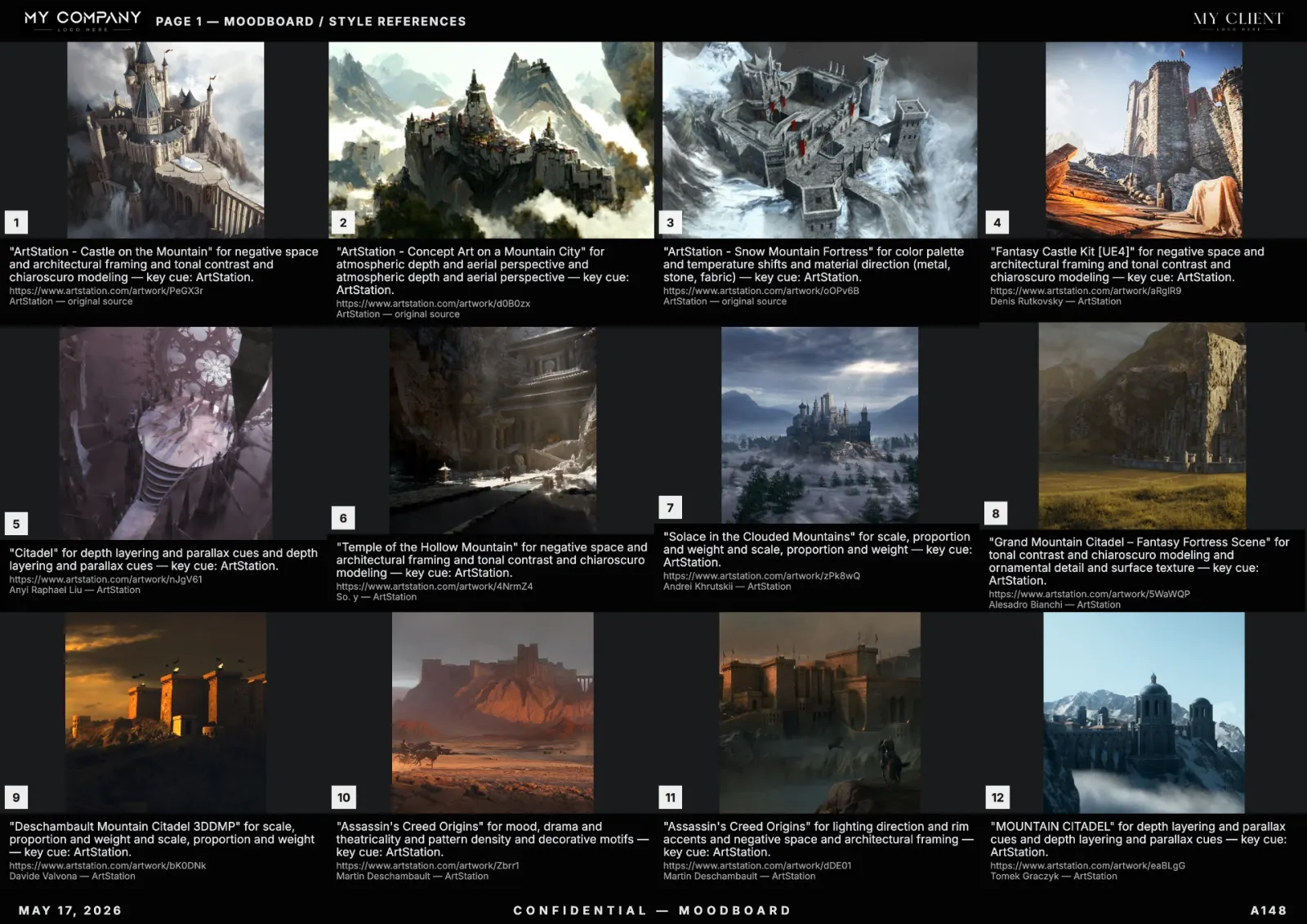
In a game studio, the moodboard is the contract between the art director and 30+ artists across two continents. When that contract is fuzzy, you ship inconsistent characters, mismatched environments, and a six-month polish phase. AI moodboards have quietly become the most efficient alignment tool in modern game art pipelines.
Three boards every project needs
- World board — biome, architecture, time of day, weather logic.
- Character board — silhouettes, materials, color rules per faction.
- Camera board — lens, framing, lighting language.
Why AI moodboards beat shared Pinterest folders
Pinterest is great for discovery, terrible for alignment. References disappear, captions are missing, palettes drift. An AI moodboard tool gives you versioned, captioned, palette-locked boards that can be reviewed in a 30-minute weekly art sync.
Template per faction, palette per biome
Save a template per faction (header, footer, palette band) and reuse it for every concept artist. Save a palette per biome and lock it on the board so the AI never returns off-brand references.
Review cadence that scales
- Monday: AD ships the week's target board.
- Wednesday: artists post WIPs against the board.
- Friday: 30-minute sync, board updated with locked tiles for next week.
From moodboard to style frame to in-engine
A moodboard is the photographic target. The style frame is the painted target. The in-engine shot is the playable target. All three should sit side by side in the same RefMood document so any artist can compare reference, painting, and engine in one click.
FAQ
Do AAA studios actually use AI moodboards?
Yes — for pre-production, pitch decks, and weekly art syncs. Final concept art remains hand-painted; the moodboard is the brief, not the deliverable.
What about IP-sensitive projects?
Use a tool with traceable sources and license metadata. RefMood attaches both to every tile.