Moodboard vs Storyboard vs Style Frame: When to Use Each
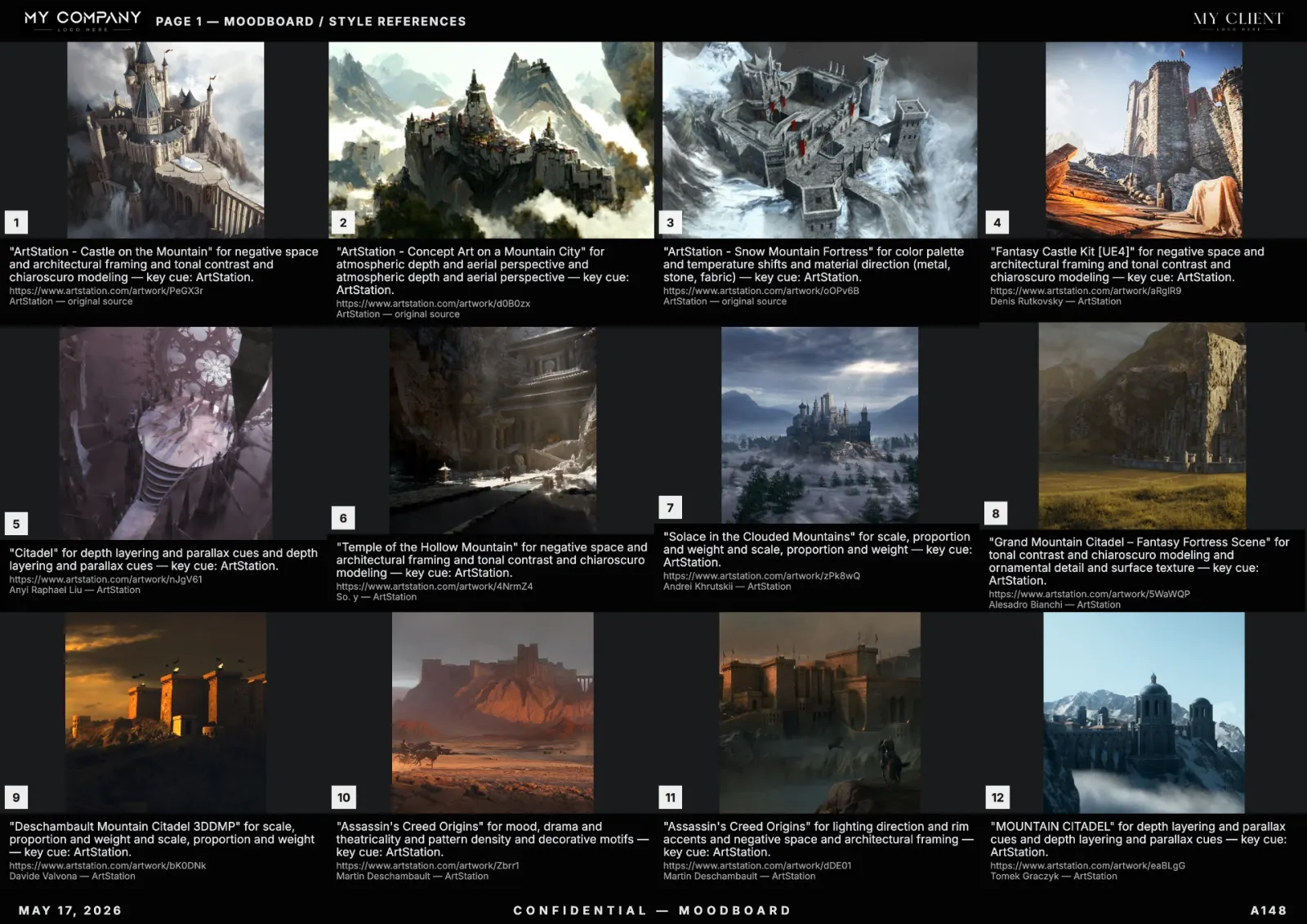
Three documents own pre-production: the moodboard, the storyboard and the style frame. Confusing them costs days of revisions. Here is what each one answers, in one sentence.
Moodboard — what does it feel like?
A grid of curated references that locks the tone, palette and texture. It is research, not narrative. It does not show your shot. It shows the world your shot lives in.
Storyboard — what happens, in what order?
A sequence of frames showing action, framing and continuity. It can be loose pencil or fully painted. It answers: "Does the scene work?"
Style frame — what does the final shot look like?
A single, fully rendered frame that locks the look: lighting, color grade, finish. Painted, photo-bashed or 3D-rendered. It is the visual contract for the post-production team.
The pipeline order
- Brief → moodboard (research locks tone)
- Moodboard approved → storyboard (sequence locks story)
- Storyboard approved → style frame (finish locks look)
Where AI helps
Moodboards are now generated in seconds. Storyboards are still hand-drawn for clarity. Style frames are hybrid: AI for the base, painters for the final 20% that sells the shot.
FAQ
Do I need all three?
For broadcast or theatrical work: yes. For social-only: moodboard plus a single style frame is usually enough.