What Is a Moodboard? Definition, Purpose and Examples (2026)
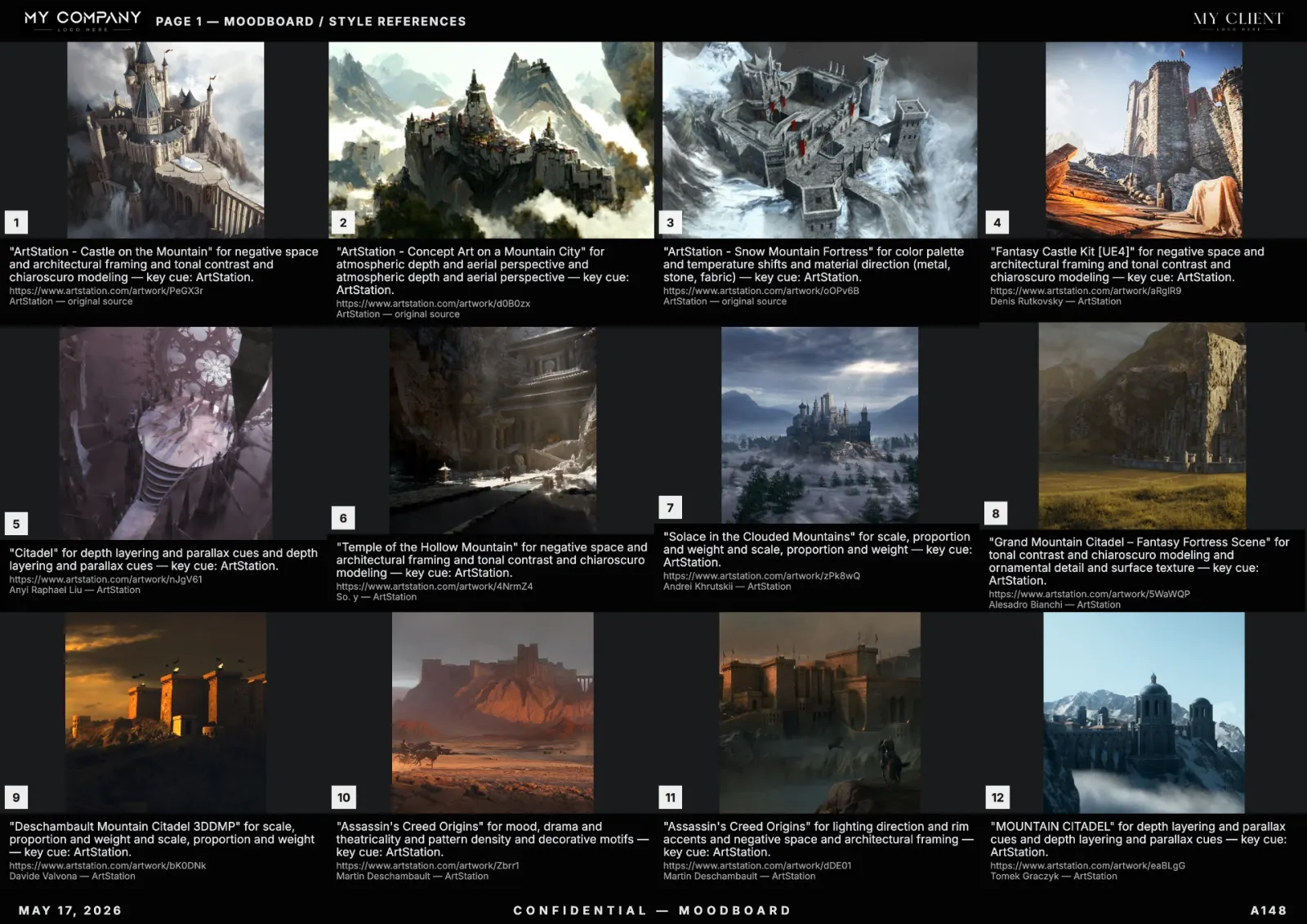
A moodboard is a curated visual document — usually a grid of images, color swatches and short captions — used to lock the tone, palette, texture and direction of a creative project before production begins. It is the single most important pre-production artifact in advertising, film, game design, fashion, architecture and brand design.
The short definition
A moodboard is a deliberate collage of references that answers one question: what should this project feel like? It does not show the final work. It shows the world the final work lives in.
Where the word comes from
The term emerged in 1970s fashion design studios where art directors pinned fabric swatches, magazine clippings and Polaroids on physical cork boards to align teams. By the 2000s "moodboard" had migrated into Photoshop, then Pinterest, then dedicated tools. In 2026 the default workflow is an AI moodboard creator that generates a curated, editable, exportable board in under a minute.
What a moodboard actually contains
- Hero references — 12 to 24 photographs, paintings or concept art tiles.
- Color palette — 4 to 6 dominant hues extracted from the references.
- Texture and material studies — close-ups of fabric, light, surface finish.
- Typography swatch (optional) — for brand and graphic projects.
- Captions — one short sentence per tile explaining why it is on the board.
What a moodboard is NOT
This is where most beginners fail. A moodboard is not:
- A storyboard — that shows action and sequence.
- A style frame — that shows the final, painted result.
- A Pinterest collection — that is unstructured discovery, not a creative contract.
- The final deliverable — it is the brief, not the work.
Why teams use moodboards
Three reasons, in order of importance: alignment (everyone sees the same target), compression (a board prevents 6 rounds of "make it more brutalist"), and memory (the board outlives every Slack thread). Without one, every revision turns into an opinion war.
Concrete example: a moodboard for a watch campaign
A jewelry brand briefs an agency for a new watch line: "premium, masculine, mineral, photographed in natural light". A weak moodboard would dump 30 watch photos on a page. A strong one shows:
- 3 references for light — golden hour through linen curtains.
- 3 references for material — brushed steel, basalt, leather patina.
- 3 references for composition — minimal still life, negative space.
- 1 palette band — anthracite, oxidised brass, off-white, deep blue.
- 3 references for the person wearing it — not models, just hands.
That is a brief the photographer, retoucher, and art director can all act on without asking a single follow-up question.
Industries that depend on moodboards
- Film and TV — DPs build lookbooks for every scene.
- Advertising — every campaign starts with a moodboard pitch.
- Game studios — concept art teams align on world, characters and camera.
- Fashion — every collection opens with a season moodboard.
- Architecture and interior design — material and atmosphere boards.
- Brand and product design — visual identity, packaging, web direction.
How to make a moodboard in 2026 (60-second version)
Open an AI moodboard creator like RefMood, type a one-line prompt (subject, mood, medium, era), pick a color palette to lock, generate. Curate the result, add captions, apply your studio template, export PDF. The whole process takes under 5 minutes. The full pillar guide walks through every step.
Is it "moodboard" or "mood board"?
Both are correct. "Mood board" (two words) is the historical spelling; "moodboard" (one word) is dominant in 2026 industry usage and in software UIs. Search engines treat them as the same term.